It’s no coincidence that we do a lot of decorating at the time of year when daylight is scarce, or that much of that decorating involves twinkle lights. Dreary days become considerably more cheerful when we surround ourselves with extra beauty, sparkle, and glistening magic. Because the holiday season is when our decorating extends to the outside of the home and when we use outdoor materials inside, some special considerations should be made to do both successfully.
Bringing the Outside In
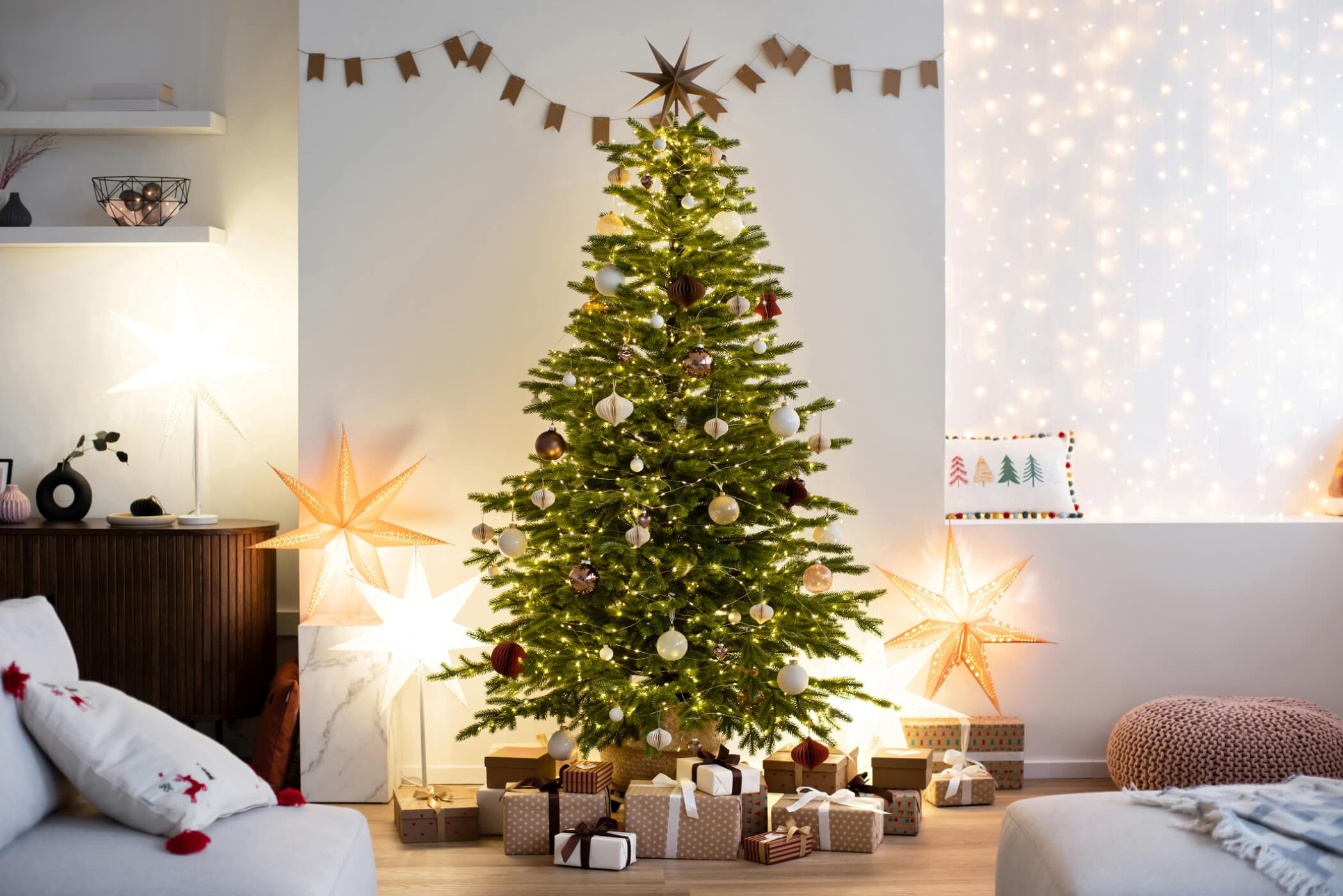
There’s nothing like a freshly cut live Christmas tree – the woodsy fragrance, the fullness and beautiful imperfection, and of course, the memories created in search of this year’s perfect tree and bringing it home. Since there’s no other time of the year we do this odd activity, it helps to remember a few key guidelines:
Always get a fresh cut on the bottom of the tree trunk before bringing it inside. This especially applies to pre-cut trees (versus cut-your-own). Christmas tree farms will offer to do it for you, but if you get your tree early and won’t bring it indoors for a week or more, wait to cut until you’re ready. You want your tree to be able to soak up as much water as possible because the heat of our homes will dry out the branches very quickly. As you’re choosing between trees, remember that you’ll lose a couple of inches in height when you make the fresh cut.
Make sure you use a tree stand that’s large enough to hold your tree securely. Fill the stand with warm water as soon as your tree is upright. As your tree warms up, it will absorb more water, so check the stand’s water level twice a day for about the first week, then once daily afterward. Making sure your tree is hydrated will not only prolong its beauty, it will reduce the likelihood of it becoming a fire hazard.
Before bringing fresh wreaths and arrangements of greens inside, spray them with an anti-desiccant spray (like Wilt-Pruf) to reduce dehydration. Allow the spray to dry completely before hanging or placing them – it’s a bit sticky when wet.
Brightening the Dark with Lights!
Whether you choose colored lights, white lights, or some combination of both, we have some essential advice on how to use them in your landscape.
Avoid hanging lights on delicately-branched plants like Japanese Maple or those with large flower buds like Magnolia. Both the placing and removing of lights on plants like these can damage branches and break off next year’s flower buds. Refrain from hanging strings of lights on plants with weeping forms as well. Alternatively, illuminate them with a spotlight.
Using net lights instead of string lights on smaller shrubs is kinder to plants. Unlike string lights, which require some threading through branches to stay in place, net lights can be placed on top of plants – so they’re easier on you, too!
Never remove lights when the temperature is below freezing; both the light strands and the plants are less flexible and it’s very easy to damage branches and break off buds when it’s so cold.
Decorating with Winter Greenery
If you have weather-tolerant decorative urns made of concrete, composite, or plastic, you can fill your urns with fresh evergreen branches, dried seed-heads, and more to create lush, inviting arrangements for your outside spaces.
A trip to the local nursery will provide a wonderful choice of greens – pine, fir, cedar, juniper, boxwood – and colorful bare branches – dogwood, willow, birch – that can be combined into beautiful displays in your decorative urns. Different sized pine cones are available in their natural color or jazzed up with glitter, colors, or even snow. Real and artificial berries can be a focal point or colorful accent in winter pots, but be sure to skip any berries made of Styrofoam – their painted shells will crack in the cold, exposing the white inside and dramatically altering the desired look of your decorative urns.
Heavy decorative urns are best kept in place, but smaller or lighter containers may be moved to maximize enjoyment…flanking the front door, within view of the kitchen window, or near the side door that the whole family uses. Since most of our winter relaxation time is spent inside, place your winter pots where you and your guests will see them the most.
Avoid using ceramic or terra cotta pots for winter containers. Their porous nature is prone to cracking during our freeze-thaw cycles.
Know when to hire a professional!
Beautiful winter decorative urns are a stunning addition to outdoor décor but it can be time-consuming to acquire and arrange them during such a busy time of the year. Bruss Landscaping has a custom decorative urn program that allows you to have gorgeous planters without the effort. You can sign up for Spring, Summer, Fall, Winter, or all four seasons! To find out more about it, visit us here.